

All data is encrypted at rest and stored in secure cloud-based data centers hosted in the Microsoft Azure cloud. Depending on the location of your firm. Your data may be in the United States, Canada, Ireland, Hong Kong, or Australia. All data centers are ISO 27001 / SOC 2 compliant and built by Microsoft for maximum resiliency and performance. You can click here to learn more about Azure’s Global Infrastructure.
AuditDashboard data is accessed by firm professionals and their client contacts who are specifically invited to the firm’s AuditDashboard portal. Users access AuditDashboard using their email address and a strong password created during the registration process. Alternatively, users may login using a Single Sign On (SSO) provider.
Yes, AuditDashboard’s databases and infrastructure are backed up multiple times per day to a secured backup network that guarantees redundancy and data availability, while preserving data residency. All backups are encrypted at rest and stored for 90 days by default. The duration of backup storage may be customized to meet a customer’s specific requirements.
Data retention policies vary by customer. For specific details about how long your data is retained for, reach out to your account manager or send us a message.
Yes, AuditDashboard provides comprehensive audit logs, tracking user logins and all activities within the portal. These logs are available in various formats, including engagement reports and user activity feeds. Additionally, you can access user activity data through the Audit Dashboard API for more customized use.
AuditDashboard maintains a SOC 2 Type 2 Review annually, and maintains a CSA CSM / STAR registry continuous self-assessment here. You can read more about our compliance programs on our compliance page. Customers or prospects can request a copy of our SOC 2 Type 2 report and our security overview documentation by visiting this link.
The AuditDashboard platform is designed, developed, and supported with security at its core. Our application is built on recognized security frameworks and best practices for secure code development and deployment. Networks feature layered protection across different zones, environments, and services. All data transmitted between end users and the platform is encrypted using TLS 1.3, with TLS 1.2 also accepted. All data stored within the platform is encrypted at rest. Read more about our security posture here. Read more about our security posture here.

AI is moving faster than any technology the profession has ever adopted. New models and new ways to put them to work arrive every other week. Around the world, the adoption of AI in audit firms is moving at very different speeds, and so is the value firms are realizing from it. Some firms have one Copilot license and a few curious staff. Others are all in, employing AI agents to help with routine work like reviewing audit evidence overnight and drafting corresponding comments for clients.
Read more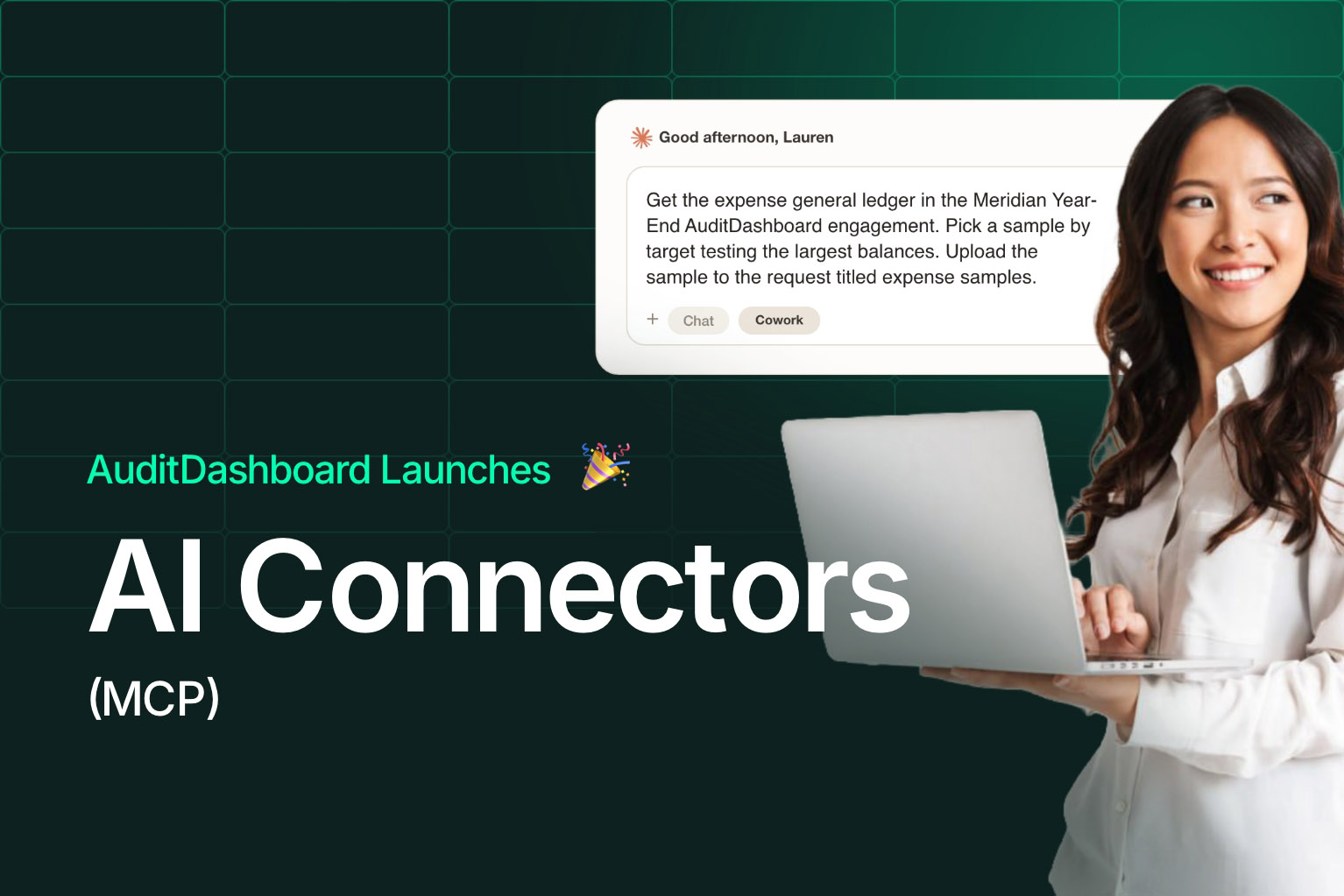
AuditDashboard’s AI Connectors, built on the Model Context Protocol (MCP), an open standard for securely connecting AI models to software, let firms’ AI agents read from and write to their AuditDashboard engagements.
Read more.png)
Hundreds of conversations with firm leaders about resourcing, scheduling, and client readiness led us to build Collaborative Scheduling. Great team and client experiences rely on great planning, so we expanded our workflow to help leaders deliver a more consistent experience across all engagements.
Read more


